
Bangkok Street Fighting Continues, Death Toll Mounts
Sunday, May 16, 2010
 Street fighting continues in the Thai capital, Bangkok, as anti-government protesters try to push back soldiers who have surrounded their camp. At least 22 people were killed in the last two days and at least 170 wounded.
Gunfire and explosions continued Saturday as protesters for a third day clashed with security forces surrounding their camp.
Saturday afternoon, just north of the protest area, the Thai army spread razor wire and set up checkpoints. They put up signs that read "live fire zone" and urged people not to enter.
The anti-government red shirts set up their own barricades of rubber tires and slowly drove a yellow tanker truck toward the soldiers, until shots were fired. Demonstrators hit the ground and scattered into alleyways.
A few protesters could be seen limping away bleeding, apparently shot, but still defiant. They received medical care from nurses standing by to aid casualties.
Army spokesman Colonel Sansern Kaewkamnerd spoke on national television and said the government regrets the deaths and injuries. He says the army has been trying very hard to use measures to end the protest while avoiding any losses.
Authorities blame the clashes on violent elements among the protesters that they say have fired grenades and guns at soldiers who were forced to return fire. Protesters, however, say soldiers and snipers are aiming to kill them.
The latest violence broke out Thursday after a Thai general supporting the protesters was shot, apparently by a sniper. The protesters have occupied a central commercial district for more than two months, demanding the government step down and allow new elections.
A deal for November elections broke down after protest leaders demanded government leaders face charges for the violent clashes. The government says it expects to restore order within a matter of days.
Saturday evening, Prime Minister Abhisit Vejjajiva went on national television and said the security operations are the only way to restore normalcy in the capital. He asked the public to cooperate with security forces.
But Bangkok is looking and sounding increasingly like a war zone. Well into Saturday night, explosions and gunfire could be heard in the city center.
And normally bustling streets near the protest area are empty with shops closed and few people daring to walk on the streets. Most mass transit has been shut down and many highways are closed by the fighting.
Bombing Suspect Faisal Shahzad Still being Questioned
Thursday, May 06, 2010
 U.S. officials say a Pakistani-American charged with an attempted car bombing in New York City is cooperating with investigators as they try to determine a motive for the planned attack. Faisal Shahzad was arrested late Monday and charged with trying to blow up a sports utility vehicle in crowded Times Square on Saturday. Meanwhile, authorities in Pakistan say they have made arrests in connection with the failed car bombing.
The man charged with numerous counts of terrorism was born in this tiny northwestern village known as Mohib Banda. Faisal Shahzad's father is a retired air vice marshal in the Pakistani military. He comes from an upper-middle class family. Neighbors in this town of 5,000 are saddened by the news.
"I am weeping for my village; I am weeping for this unfortunate family," Nazirullah Khan, retired school teacher said. "What on earth is going on?"
Some analysts say discontent is bubbling up from the Pakistani middle class because of U.S. restrictions on visas and increased screening after recent bomb attempts. However, Faiz Ahmed, village elders says he knows Shahzad. "He was an absolutely normal person. He had no connection with any religious party or any political party," he recalled.
But police say Shahzad, now a naturalized American citizen, admitted to his role in Saturday night's attempted car bombing. And, that he took bomb making lessons in Pakistan.
The Pakistani Tehrik-e-Taliban, initially claimed responsibility for the attempted act of violence. The group, based along the border with Afghanistan, had been targeting the Pakistani government, not the U.S. But now, counterterrorism research fellow, Brian Fishman, worry the group's reach may go farther. "This is clearly a sign that the group has become closer to al-Qaida and is looking to attack abroad," he said.
Other experts do not believe the Taliban in Pakistan have the resources for such an act. They think Shahzad may have acted alone when they say he parked his car rigged with bomb materials in Times Square. The terrorism attempt comes at a bad time for U.S.-Pakistani relations. Analysts say the two countries were starting to make progress against the Taliban. The U.S. ambassador on Wednesday met with senior Pakistani officials, including President Asif Ali Zardari .
"They recognize as we do, that this is a shared responsibility and a shared threat," said P.J. Crowley of the US State Department.
Federal agents stopped the flight and removed Shahzad, who managed to board the airplane despite being placed on a "no-fly" list hours before. Now, the U.S. government is changing the rules to require airlines to check the no-fly list within two hours after being notified of changes. Legislators on Capitol Hill are also looking at new laws to deny gun and explosive purchases to suspected terrorists.
"We don't want to rob people of a constitutional right but - I kind of don't like saying this, but I'm going to do it, and that is - to err on the side of protection is the chance sometimes we have to take," said Democratic Senator Frank Lautenberg from New Jersey.
Shahzad's first appearance in an American courtroom was delayed. Law enforcement officials say they are keeping him busy with interrogations - and that he's giving them significant information.
UN Bhutto Inquiry: Assassination was Preventable
Saturday, April 17, 2010

The U.N. Commission of Inquiry charged with investigating the December 2007 assassination of former Pakistani Prime Minister Benazir Bhutto says her murder could have been prevented if adequate security measures had been taken. The 65-page report released Thursday faults the Pakistani government and local authories, as well as the police, for not taking the necessary measures to protect her. The commission also criticized the subsequent police investigation.
The highly-anticipated report says the ultimate responsibility for Ms. Bhutto's security on the day she was killed rested with the federal government, the local government of Punjab, and the police in Rawalpindi, where she died in a gun and suicide attack.
The head of the panel, Chilean U.N. Ambassador Heraldo Munoz told reporters in a news conference shortly after the report's release, that none of these entities took the necessary measures to protect her from the extraordinary security risks she faced. "A range of government officials failed profoundly in their efforts; first, to protect Ms. Bhutto; and second, to investigate with vigor all those responsible for her murder -- not only in the execution of the attack, but also in its conception, planning and financing," he said.
He said Ms. Bhutto had a clear understanding of the risks she faced in returning to Pakistan, as did the government of then-President Pervez Musharraf, but it was not adequate for the government to simply inform her of the dangers, it should have taken steps to protect her.
Munoz and the other two commission members -- Indonesian former attorney general Marzuki Darusman and Irish former police official Peter Fitzgerald - and their staff, interviewed more than 250 people inside Pakistan and elsewhere, and examined and analyzed hundreds of documents, videos, photographs and other documentary information during their nine and half month fact-finding investigation.
Among their other conclusions was that actions and omissions by the Rawalpindi police in the immediate aftermath of the assassination - including hosing down the crime scene and failing to collect and preserve evidence - caused irreparable damage to the investigation. "The collection of 23 pieces of evidence was manifestly inadequate in a case that should have resulted in thousands of pieces of evidence," he said.
The panel said a government news conference the day after the assassination was ordered by President Musharraf. During that event, a government official said Ms. Bhutto's death was caused when she hit her head on the lever of her vehicle's escape hatch. The government also blamed Pakistani Taliban commander Baitullah Mehsud and Al-Qaida for the suicide bomber that attacked her convoy.
Ambassador Munoz said those assertions were made well before any proper investigation had been initiated. "This action pre-empted, prejudiced and hindered the subsequent investigation," he said.
Pakistan's powerful intelligence agency, the ISI, also came in for criticism in the report. The commission found that the agency conducted parallel investigations, gathering evidence and detaining suspects, which it selectively shared with police. It also failed to inform police of intelligence it had about terrorist cells targeting Ms. Bhutto.
The report concluded that failures of the police and other officials to react effectively to Ms. Bhutto's assassination were in most cases, deliberate. In other cases, the panel said failures were driven by officials' fears that intelligence agencies were involved.
The panel also criticized authorities for deliberately preventing an autopsy of Ms. Bhutto, saying it impeded a definitive determination on the cause of death.
The commission's report was supposed to be released on March 30, but after a last minute request from Pakistan's government to U.N. Secretary-General Ban Ki-moon, a two week delay was agreed.
Ambassador Munoz said no changes were made to the report during that period.
The report was submitted to Mr. Ban Thursday afternoon. He then transmitted it to the Pakistani government, via their U.N. ambassador Abdullah Haroon. It was also to be given to the 15-member U.N. Security Council for 'information purposes.'
Ambassador Haroon abruptly canceled a news conference at U.N. headquarters moments before it was to happen. His spokesman said the government would respond to the report from Islamabad.
The commission's task was only to investigate the facts and circumstances surrounding Ms. Bhutto's death. It was not a criminal investigation. That now lies with the Pakistani authorities.
Deposed Kyrgyz President Leaves Country and Resigns
Saturday, April 17, 2010

The deposed president of Kyrgyzstan, Kurmanbek Bakiev, has flown out of the country, ending a week-long standoff with the interim government. The Associated Press is reporting that Mr. Bakiev has formally resigned as president.
A week after fleeing the capital amid violent anti-government protests, President Bakiev boarded a military aircraft at Jalal-Abad in the southern part of the country and left Kyrgyzstan.
The flight landed in Taraz in neighboring Kazakhstan.
A representative of the interim government's press office, Melis Erdjigitov, confirmed to VOA News that Mr. Bakiev had departed the country, but would not comment on his destination.
Kazakhstan currently holds the presidency of the Organization for Security and Co-operation in Europe, which had been involved in negotiations to resolve the standoff between the provisional leadership and the ousted president.
The interim government replaced Bakiev after security forces fired on demonstrators angry with his administration. More than 80 people died and hundreds more were wounded.
The president, in power for five years, lost support of the public amid accusations he gave family members influential positions and used their posts to enrich themselves. There were also complaints from civil society about of violations of human rights and muzzling the media.
The news of the president's departure came just hours after U.S. Assistant Secretary of State Robert Blake completed two days of meetings with Kyrgyzstan's provisional government.
"I encouraged them to be fully transparent in everything that they are doing to be in very close touch, in consultation, with members of Kyrgyz civil society who, in turn, represent the people of Kyrgyzstan," he said.
The U.S. envoy says technical support and other assistance for Kyrgyzstan to restore democracy was the focus of his visit, rather than the controversial Manas air base. The facility, just outside the capital Bishkek, is used to move American troops and supplies in and out of Afghanistan.
The U.S. envoy told reporters the United States is willing to review the transit center's lucrative fuel contracts, which are controlled by members of the family of the ousted president.
The interim government has pledged to honor the remainder of the facility's annual lease, which expires in July.
Poland Prepares for State Funeral Amid Dispute About Burial Site
Saturday, April 17, 2010

Poland is preparing to bury President Lech Kaczynski, his wife Maria, and 94 other prominent military officials and civilians killed in a plane crash last Saturday in western Russia. But, some people object to the burial site chosen for the late president.
Poland is in mourning. In Warsaw, preparations are underway for a memorial service on Saturday for all those killed in the crash.
A state funeral is planned Sunday for President Lech Kaczynski and the first lady. A number of world leaders are expected to attend, including U.S. President Barack Obama and the leaders of Russia, France and Germany.
But the location of the burial that is stirring controversy. Wawel Cathedral in the southern city, Krakow, is the traditional burial site of Polish kings and national heroes. Some Poles say, although they mourn the death of President Kaczynski, they do not believe he falls into that category.
Hundreds of people have demonstrated in Krakow to make that point. In Warsaw, a smaller crowd of several dozen mostly young people gathered late Wednesday with a similar message.
Speaking with VOA, protest organizer Martina Schultz explained why she posted an Internet petition against the burial.
She says we think President Kaczynski should be buried in Warsaw not at Wawel. I am not talking about his achievements, she says, I am not trying to diminish them, I tried to write the petition so as not to hurt anyone's feelings."
Shultz says she believes the decision to bury President Kaczynski at Wawel was taken in haste and under emotional stress and not considered properly.
She says 10,000 people have signed the petition and another 35,000 have signed it on Facebook. And, she says the protests would continue.
Polish officials say the burial site was chosen by leaders of the Catholic Church and the Kaczynski family, which include the late president's twin brother Jaroslaw, the leader of Poland's opposition.
Magdalena, 18, says she came to the protest meeting to express her feelings, even though she believes it is too late to change burial plans.
At one point she says "I may be young, but I know what I think and can say it." She says she believes people's emotions of grief are being manipulated.
Those sentiments are not likely to hold sway with the many thousands who have lined up in front of the Presidential Palace in Warsaw to file past the coffins of the president and first lady lying in state inside.
Krzysztof is with a delegation of coal miners, who have come from near the city of Katowice in southern Poland.
He recalls that President Kaczynski came to the mining area on several occasions, he respected the president and he says it would be inappropriate not to be here to pay tribute.
Iran to Host Own Nuclear Summit Saturday
Saturday, April 17, 2010

The Iranian government is hosting a nuclear conference Saturday and Sunday in Tehran, in counterpoint to the Washington summit this week to which it was not invited. The meeting comes as the U.S. pushes for a fourth set of sanctions over Tehran's disputed nuclear program, a drive that appears to be gaining momentum.
Looking ahead to the Tehran meeting, Iranian President Mahmoud Ahmadinejad insisted that his country is doing its best to work with world powers.
In an interview on state television, Mr. Ahmadinejad said "we are actually after cooperation and negotiation. We still are.” He added that Iran was willing to deal with a formula that protects Iran's rights, includes its independence, dignity and honor - and excludes the nuclear issue.
It's that kind of mixed message that frustrates so many. Iran insists its nuclear program is for peaceful, civilian purposes. But by refusing to comply with U.N. nuclear agency requests, it deepens suspicions that it seeks nuclear weapons.
Ezzedine Choukri Fishere, political science professor at the American University in Cairo, says the Iranian program is worrying for almost everyone, both in the region and in the international community.
“The fact that Iran insists on pursuing these features and refusing to reassure the international community and its neighbors,” Fishere said, “means that those who are worried about it enough to take action, will eventually take action."
The conference in Iran appears aimed at showing Tehran still has supporters. India is one nuclear power sending a representative, though at a far lower official level than at the Washington summit.
There are signs others are losing patience. China, which has been holding out against further U.N. sanctions, has agreed to be involved at least in the drafting of new measures. The veto-wielding nation depends on Iran for some ten percent of its oil, although in recent months has been looking at other Persian Gulf nations as possible suppliers.
Further complicating efforts of those wishing to support Iran are comments by authorities that leave many simply baffled.
Earlier in the week, a senior official at Iran's atomic energy agency declared the country would become a member of the "nuclear club" within a month. The term is commonly used to describe nations with nuclear weapons.
U.S. Defense Secretary Robert Gates was quick to dismiss the idea, saying he didn't believe it.
“I think most estimates that I've seen haven't changed since the last time we talked about it, which is, at least a year, maybe more," Gates said.
Political science professor Fishere argued both sides need to go beyond reacting to statements like that about the nuclear club, which he says could be aimed at a domestic audience or simply a matter of mistranslation. He urged the United States and Iran to sit down to direct dialogue about all the issues at stake. But he argues that the offer by President Barack Obama to reach out to Iran didn't go far enough.
"What the Obama administration did was incurring the political cost of calling for a dialogue with Iran, but without actually the benefit of engaging in that dialogue,” Fishere said.
He added that he hopes the administration will be bold enough to finally engage in face-to-face dialogue and put on the table the serious issues and the real issues it is worried about.
Fishere said the U.N. offer last year to enrich Iranian uranium abroad -an offer rejected by Iran - was a good start, arguing that broadening that dialogue will help bring Iran back from what he calls the "abyss" that it appears to be approaching.
110 Dead as Cyclone Slams Eastern India, Bangladesh
Saturday, April 17, 2010

A cyclone has hit eastern India and Bangladesh, killing at least 110 people and destroying more than 60,000 homes. The storm ripped across India's West Bengal and Bihar states and neighboring parts of Bangladesh late Tuesday. Four of the deaths were reported in Bangladesh, including a police officer who was crushed under a wall. The cyclone packed winds of up to 120 kilometers an hour, destroying power and telephone lines and uprooting trees in Bihar and West Bengal. Indian authorities are rushing aid to cyclone-hit areas, and the homeless are being shifted to temporary shelters. The Bay of Bengal region is frequently battered by storms and cyclones. In 2007, Cyclone Sidr killed more than 3,500 people in Bangladesh and displaced 2 million others. Some information for this report was provided by AP, AFP and Reuters.
Terrible earthquake’ kills hundreds in China
Saturday, April 17, 2010
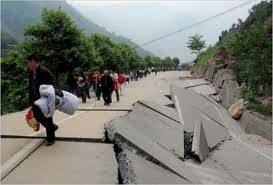
BEIJING - A series of strong earthquakes struck a far western Tibetan area of China on Wednesday, killing at least 400 people and injuring thousands as houses made of mud and wood collapsed, trapping many more, officials said.
State television channel, CCTV, quoted an emergency official, Pubucairen, as saying that the number of injured was believed to be more than 10,000.
The main temblor of magnitude-6.9 struck in southern Qinghai province, near Tibet, on Wednesday morning, the U.S. Geological Survey said. The USGS recorded six temblors in less than three hours, all but one registered 5.0 or higher.
The official Xinhua News Agency reported that a number of school buildings had collapsed, citing witness reports that some students had been killed and others were trapped in the rubble.
Workers were racing to release water from a reservoir in the disaster area where a crack had formed after the quake to prevent a flood, according to the China Earthquake Administration.
The quake was centered on Yushu county, a Tibetan area in Qinghai's south, with a population of about 100,000, mostly herders and farmers.
The main quake sent residents fleeing as it toppled houses made of mud and wood, said Karsum Nyima, the Yushu county television station's deputy head of news, speaking by phone with broadcaster CCTV.
In a flash, the houses went down. It was a terrible earthquake," he said. "In a small park, there is a Buddhist pagoda and the top of the pagoda fell off. ... Everybody is out on the streets, standing in front of their houses, trying to find their family members."
The earthquake comes a little less than two years after a magnitude-7.9 quake in neighboring Sichuan province left almost 90,000 people dead or missing. That quake flattened several schools, killing thousands of students. Poor design, shoddy construction and the lax enforcement of building codes were found to be rampant, causing public anger.
Students dead, others trapped
Xinhua reported that the early morning quake had caused some schools and part of a government office building to cave in.
Zhu Liang, a driver at the Yushu prefecture government, told Xinhua that half of the Yushu Vocational School's buildings had collapsed.
"I do not know how many students have died," Zhu, who is now in the rescue operation, told the news service. "Students just got up and were yet to go to class when the quake happened. I recovered several bodies from the debris and found they were fully dressed."
"Buildings in our school were all toppled, and five pupils have died," said a teacher surnamed Chang at the Yushu Primary School, a boarding school with about 1,000 students. "Morning sessions did not begin when the quake happened. Some pupils ran out of dorms alive, and those who had not escaped in time were buried."
Xinhua added that residents said most students had been able to flee to playgrounds.
"Most of the schools in Yushu were built fairly recently and should have been able to withstand the earthquake," said Wang Liling, a volunteer worker for Gesanghua, a Chinese charity that helps school children in Qinghai.
Her group, she said, had heard that a vocational school collapsed in Yushu. "Many homes have been damaged, but we'll have to wait until this evening, when our staff arrive there, to understand anything specific."
Samdrup Gyatso, 17, who ran a shop in his two-story house in Gyegu, told Xinhua: "There are 10 people in my family and only four of us escaped. One of my relatives died. All the others are buried under the rubble."
'Thronged with panic'
In Jiegu, a township near the epicenter, more than 85 percent of houses had collapsed, while large cracks have appeared on buildings still standing, Xinhua cited Zhuohuaxia, a local publicity official, as saying.
"The streets in Jiegu are thronged with panic and full of injured people, with many of them bleeding from their injuries," he told Xinhua. "Many students are buried under the debris due to building collapse at a vocational school."
"A large crack appears in the wall of the Yushu Hotel, and part of a government office building also collapsed," he added. "I can see injured people everywhere. The biggest problem now is that we lack tents, we lack medical equipment, medicine and medical workers."
State television Wednesday showed footage of paramilitary police using shovels to dig around a house with a collapsed wooden roof.
A local military official, Shi Huajie, told CCTV that rescuers were working with limited equipment.
"The difficulty we face is that we don't have any excavators. Many of the people have been buried and our soldiers are trying to pull them out with human labor," Shi said.
"It is very difficult to save people with our bare hands."
Officials said excavators were not available and, with most of the roads leading to the nearest airport damaged, equipment and rescuers would have a hard time reaching the area.
Downed phone lines, strong winds and frequent aftershocks were also hindering rescue efforts, said Wu Yong, a local military chief.
People from the Yushu prefecture highway department were frantically trying to dig out colleagues trapped in a collapsed building, department official Ji Guodong said by telephone.
"The homes are built with thick walls and are strong, but if they collapsed they could hurt many people inside," Zhuo De told Reuters by phone from the capital of Qinghai province after contacting his family in Yushu.
Five thousand tents and 100,000 thick, cotton coats and heavy blankets were being sent to help survivors cope with strong winds and near-freezing temperatures of around 43 degrees Fahrenheit, the Qinghai provincial government said in a statement.
The epicenter of the first quake was located 235 miles south-southeast of Golmud, a large city in Qinghai, at a depth of six miles, the USGS said.
Ten minutes later, the area was hit by a magnitude 5.3 quake, which was followed after two minutes by a temblor measuring 5.2, according to the U.S. agency. Both the subsequent earthquakes were measured at a depth of 6 miles. Another quake, measuring 5.8, was recorded at 9:25 a.m.
Xinhua cited officials at the China Earthquake Networks Center as saying at least 18 aftershocks have been reported and that more temblors exceeding magnitude 6 were likely to occur in the coming days.
Pakistan 'army air strike kills dozens of civilians'
Saturday, April 17, 2010


At least 73 civilians were killed when an army jet bombed a remote village in Pakistan's tribal region of Khyber, a local official has told the BBC.
He said the incident took place on Saturday but news was slow in being reported because of the inaccessibility of the region. The jet was involved in operations against Taliban militants in the nearby Orakzai tribal region. Many people have died in air strikes in the area over the past 18 months.
The military insists most of them are militants, but independent sources say many civilians have also been killed. Villagers say another strike - by a US drone missile - killed 13 people on Monday. Gagging order Military spokesman Maj Gen Athar Abbas told Associated Press news agency on Monday that those killed in the Pakistan army air strike were attacked because it had intelligence that militants were gathering at the site.
He denied civilians had died and said the victims were initially reported to be suspected militants, AP said.
Soldeir in northern Pakistan The army is trying to flush militants out of the north Those on the ground gave a different version of events. "All those killed were innocent civilians," the local administration official told the BBC. "The dead include women and children.
Dozens of people were also injured." The official said he could not speak on the record as the military had put a "gagging order" on him to limit the fallout. He said that initial information suggested that the jet had strayed away from the conflict zone and mistook the village for a militant compound. The injured have been moved to hospitals in the nearby city of Peshawar.
They are being treated under strict guard. Police prevented a BBC correspondent from interviewing the injured at the Hayatabad medical complex in Peshawar. Other reporters have also been denied access.
Correspondents say that the army is under heavy pressure from the US to move forcefully against Taliban and al-Qaeda militants in the north-west.
The army regularly reports killing militants in air strikes, but consistently denies it is responsible for civilian deaths.
Relief agencies say the offensives against militants in Pakistan and in neighbouring Afghanistan have displaced more than one million people.
